

 %

 %

You are standing in line at Ottawa Macdonald-Cartier International Airport with your carry-on bag. You bought your cannabis from a legal seller, but you still feel nervous. You have heard different stories from friends. One said they flew with an ounce with no problem. Another said security took their vape pen. Who is right?
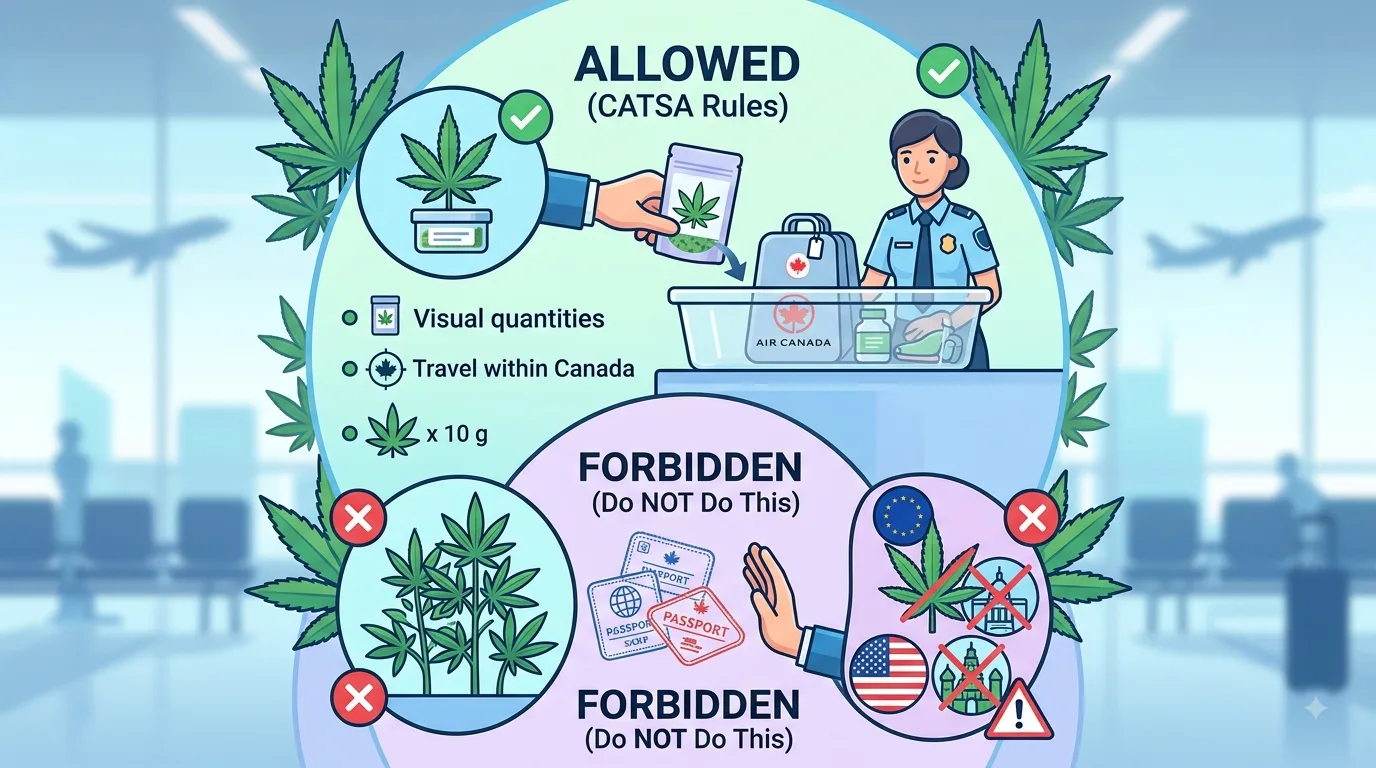
Here is the short answer. Flying within Canada with legal cannabis is allowed under federal law, as long as you stay within the possession limit. Since the Cannabis Act came into force in October 2018, adults can carry up to 30 grams of dried cannabis, or the equivalent in other forms, in public places. That includes airports and planes on domestic flights.
This guide explains what the rules say, clears up common myths, and lists the mistakes that can get your cannabis taken away or lead to bigger problems. Whether you are flying from Ottawa to Vancouver or Halifax to Calgary, these rules matter.
The Legal Framework: What Canadian Federal Law Actually Says About Flying with Cannabis
The main law is the Cannabis Act, which made recreational cannabis legal across Canada. Under this law, adults who are 19 or older can possess up to 30 grams of dried cannabis in public. In Alberta and Quebec, the minimum age is 18.
Airports are under federal jurisdiction. This means the federal possession limit applies inside airport terminals. Provincial rules still apply once you leave the airport and enter a province, so the rules about where you can consume cannabis can differ from place to place.
Understanding the 30-Gram Limit and Equivalencies
The 30-gram limit applies to dried flower. Health Canada uses equivalency guidelines for other product types:
- 1 gram of dried cannabis = 1 gram dried equivalent
- 5 grams of fresh cannabis = 1 gram dried equivalent
- 15 grams of solid edibles = 1 gram dried equivalent
- 70 grams of liquid product = 1 gram dried equivalent
- 0.25 grams of concentrates = 1 gram dried equivalent
This means you could carry up to 450 grams of cannabis gummies (30 grams dried equivalent), or 7.5 grams of concentrates. These equivalencies help travellers stay within the limit when they carry mixed products.
Where You Can Pack Cannabis: Carry-On vs Checked Baggage
For domestic flights, cannabis is allowed in both carry-on and checked bags, as long as you stay within the legal limit. Carry-on is usually the better choice. Checked bags are handled more, can be lost, and can be exposed to temperature changes in the cargo hold.
Keep your cannabis in its original packaging when you can. The label shows the THC content and producer information, which helps if a question comes up. If you bought flower from a trusted Ottawa weed store, keep the container sealed until you reach your destination.
What CATSA Screening Officers Actually Look For (And What They Ignore)
Many first-time travellers are surprised by this. CATSA screening officers are focused on security threats such as weapons, explosives, and other prohibited items. They are not looking for legal cannabis on domestic flights.
Cannabis flower looks like plant material on an X-ray. Screening officers see food, toiletries, and similar items every day, so cannabis is not usually flagged on its own. A bag can still get extra inspection for other reasons.
Vapes and their batteries get more attention, but for battery safety reasons. Lithium-ion batteries must be in your carry-on bag, not checked luggage. Follow standard battery rules whether your vape contains THC or nicotine.
When Officers Ask Questions: Your Rights and Obligations
If an officer asks what is in your bag, answer honestly. Lying to a screening officer is a serious problem and can lead to legal consequences.
Officers may ask you to open a container so they can check the contents. This is normal when something looks unclear on the X-ray. Stay calm, confirm the total is under 30 grams, and you will usually get through without trouble.
Myths That Won't Die: Debunking Common Cannabis Flying Misconceptions
Myths about flying with cannabis spread in online forums, social media groups, and conversations with friends. Here are the most common ones.
Myth #1: "You Need a Medical Cannabis Prescription to Fly"
This is false for domestic flights. Recreational cannabis users follow the same federal rules as medical patients. The 30-gram limit applies to everyone in airport terminals and on planes.
This myth comes from the time before legalization, when only medical cannabis was legal.
Myth #2: "Airport Security Treats Cannabis Like the TSA Does in the United States"
CATSA is not the TSA. Canadian federal law allows adults to carry cannabis within the limit. In the United States, cannabis is still illegal under federal law, even in states where it is legal for adults. Domestic flights in Canada follow Canadian law. Flights to or from the United States follow different rules, which are covered below.
Myth #3: "You Can't Fly with Edibles Because They Look Like Regular Food"
Edibles are legal to carry on domestic flights, as long as you stay within the limit. Remember that 15 grams of solid edibles equals 1 gram dried equivalent.
The concern about edibles usually comes from parents worried about children. Keep edibles in child-resistant packaging inside your bag.
Myth #4: "Some Airports Are Stricter Than Others"
CATSA applies federal rules across Canadian airports. Individual officers may handle questions differently, but the rules are the same everywhere. If someone had a bad experience at one airport, it was usually because they were over the limit or had an unrelated issue.
Myth #5: "You Should Hide Cannabis Deep in Your Bag"
Hiding cannabis can make officers more suspicious. Pack it like any other legal item you are carrying, and keep it easy to reach if an officer needs to check it.
What You Absolutely Should Not Do: Critical Mistakes That Turn Legal Cannabis Into Legal Problems
Knowing what is allowed is only half the story. These mistakes can lead to confiscation or worse.
Never Fly Internationally with Cannabis
This is the most important rule. Do not take cannabis across an international border, even to a place where it is legal. This includes the United States, Mexico, Uruguay, and countries in Europe.
Border officers screen for cannabis. Trying to take it out of Canada can lead to arrest and criminal charges. If you are flying from Ottawa to a U.S. city, leave your cannabis at home. You can order from an Ottawa cannabis delivery service when you return.
Don't Exceed the 30-Gram Limit, Even by a Little
The 30-gram limit is a hard legal limit. Going over it, even slightly, can mean illegal possession. Weigh your cannabis before you leave, especially if you carry several product types.
Do not count items. Weigh them and calculate the total dried equivalent. For example, three 5-gram gummies make 15 grams of edibles, which equals 1 gram dried equivalent. That is well within the limit.
Never Consume Cannabis in Airports or on Aircraft
Possessing cannabis in an airport is legal. Consuming it is not. Airports are smoke-free and vape-free environments, and consuming cannabis on an aircraft is prohibited.
Airlines can refuse to let impaired passengers fly, and flight crew can involve law enforcement. Wait until you have landed and left the airport before you consume anything.
Be Careful with Connecting Flights
If your trip includes a connection through an airport with international flights, pay attention to the route. Some terminals have restricted zones with different rules. If you are unsure, check with the airline and CATSA before you travel. Keeping cannabis in your checked bag may cause other issues, so plan the route in advance.
Never Lie to CATSA Officers About Bag Contents
If you are not sure whether your cannabis is within the limit, say so. Officers can help you check the weight or the equivalency. Being honest is always better than trying to hide something.
Practical Tips for Stress-Free Cannabis Air Travel in Canada
Keep Products in Original, Sealed Packaging
Original packaging shows the THC content and producer information. It also keeps odour in the container, which helps you stay discreet during screening.
Use a Small Digital Scale If You Carry Multiple Products
A small digital kitchen scale helps you check the weight before you leave home. Calculate equivalencies for mixed products and write down your totals. This is a simple way to avoid going over the limit by mistake.
Arrive Early and Stay Calm During Screening
Rushing can make a legal situation feel stressful. Give yourself extra time. If you are within the 30-gram limit on a domestic flight, you are following the rules.
Think Carefully Before Shipping Cannabis
Some travellers ask whether they can mail cannabis to their destination. Shipping rules for cannabis are strict and differ by carrier and location. Do not assume a carrier will accept it. Check current shipping rules with Canada Post and the seller before you plan around this option.
Know Your Rights But Don't Be Confrontational
If an officer questions your cannabis, explain calmly that you are within the 30-gram limit for domestic air travel. Offer to show the packaging or have the product weighed. Cooperation usually resolves the question quickly.
Province-Specific Considerations When Flying Within Canada
Federal law applies at the airport and on the plane. Once you land, provincial rules apply.
Public Consumption Rules Vary by Province
Consumption rules differ across Canada. Some provinces allow consumption in more places than others, and some limit it to private property. Check the rules for your destination before you travel. Do not assume that legal travel means you can consume anywhere after you land.
Purchase Age Varies: 18 in Alberta and Quebec, 19 Elsewhere
The minimum age is 18 in Alberta and Quebec and 19 in other provinces. If you are 18 and travelling to a province with a higher age, check the rules before you carry cannabis there.
What Happens If Something Goes Wrong: Understanding Enforcement and Consequences
Mistakes happen. If you are stopped or questioned, stay calm and answer honestly. Officers have some discretion in how they respond to small overages, but going over the limit is still an offence.
Attempting to cross an international border with cannabis can lead to criminal charges. If you pack cannabis by mistake for an international flight, tell the officers right away and hand it over.
Fly Prepared, Fly Calm
Flying with cannabis inside Canada is legal when you stay within the 30-gram limit. The key steps are simple. Weigh your product and calculate equivalencies for edibles, concentrates, and liquids. Keep your cannabis in its original packaging, and carry it in your carry-on bag. Answer officers honestly if they ask questions.
Some rules matter just as much. Never take cannabis across an international border, including to the United States. Never consume it in an airport or on a plane. Once you land, check the consumption and age rules for your destination province, since they can differ from the rules where you started.
Most trips with legal cannabis are uneventful. Preparation is what makes the difference. A quick weigh-in at home and a little time to check the rules can save you a lot of stress at the airport.
Ready to stock up before your next trip, or when you get home? Browse the full Uper Weed catalogue, from craft flower and concentrates to edibles and bulk deals. Delivery is available across Ottawa and Gatineau, so your order can be waiting for you when you land.
Frequently Asked Questions
Yes. Adults can carry up to 30 grams of dried cannabis, or the equivalent in other forms, on domestic flights. The limit applies in airports and on planes.
No. Do not take cannabis across an international border, even to a place where it is legal. Leave it at home and order from a licensed Ottawa cannabis delivery service when you return.
No. The same federal rules apply to recreational users and medical patients on domestic flights.
Yes, as long as the total stays within the legal limit. Remember that 15 grams of solid edibles equals 1 gram dried equivalent. Keep them in child-resistant packaging.
No. Consuming cannabis in airports or on aircraft is not allowed. Wait until you have landed and left the airport, and follow the rules for where you are.


