
 %
 %
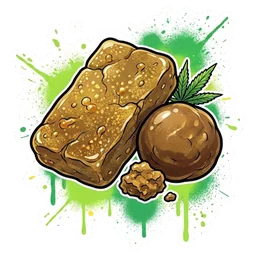
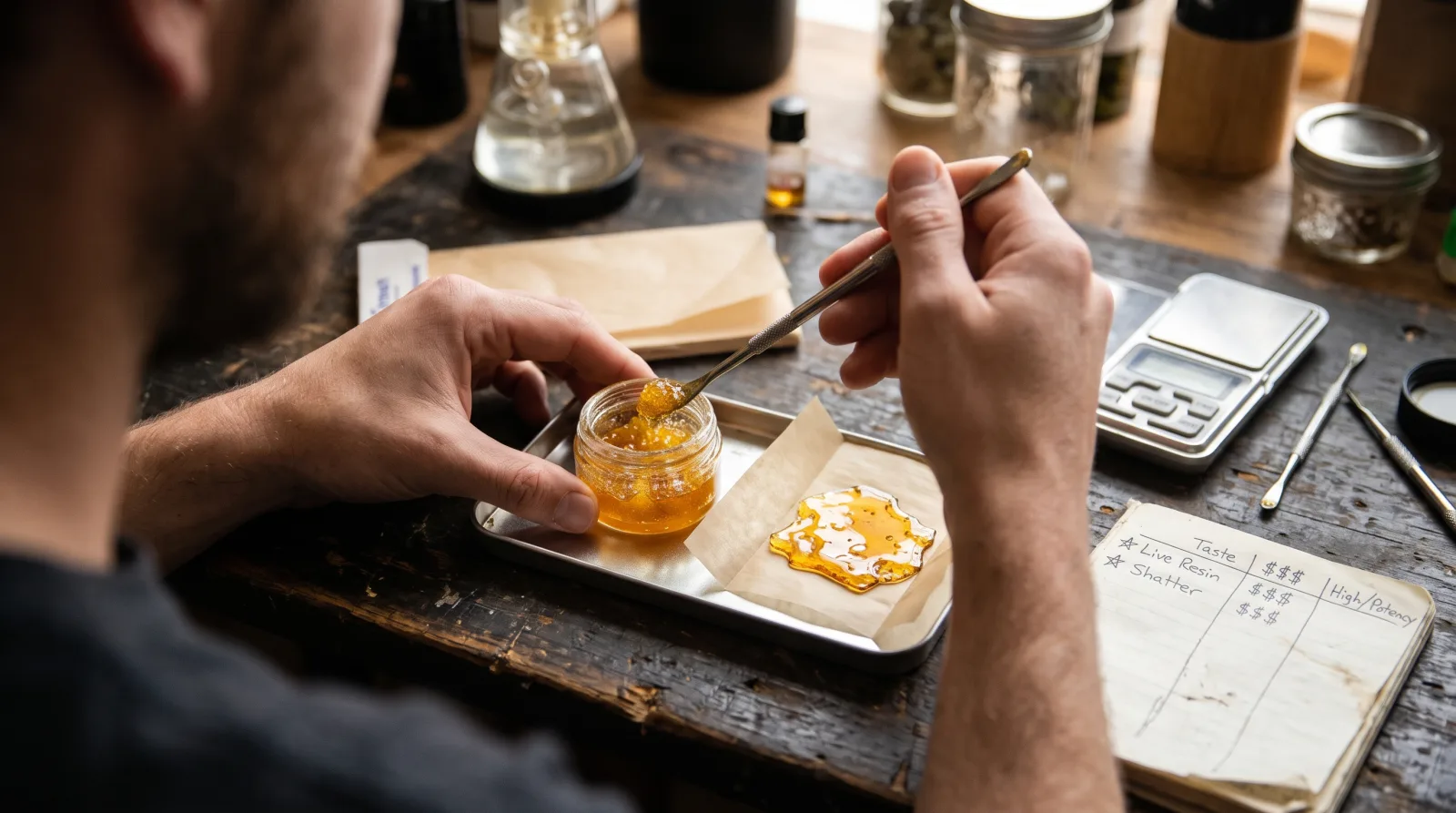
Live resin and shatter sit side by side on most concentrate menus, and at first glance they do the same job. Both are potent cannabis extracts that you dab, vape or add to a bowl. The difference shows up the moment you open the jar: one smells like a fresh plant, the other like a clean, quieter version of the strain.
That difference comes from how each one is made, and it carries through to price, storage and who each one suits. In this article we compare the two on flavour, potency and price, using the prices on our own menu, and finish with clear picks for different budgets and tastes.
How Each One Is Made
The gap between them starts before extraction. Live resin is made from cannabis that is frozen right after harvest, while the plant is still fresh. Freezing holds on to terpenes, the aromatic compounds behind a strain's smell and much of its flavour. Many of these evaporate during drying and curing, so skipping that stage keeps far more of them in the finished extract. The result is usually soft and sticky, closer to a sauce or badder than a solid.
Shatter is made from flower that has already been dried and cured. The extract is purged and left to set into a thin, glassy sheet that snaps when you bend it. Because fewer terpenes survive the drying stage, shatter tastes milder and stays firm at room temperature. Our shatter and wax category holds both the glassy sheets and the softer extracts made the same way, and the real difference between shatter, budder and crumble is texture rather than strength.
Live Resin vs Shatter at a Glance
Here is how the two compare on the points most buyers care about. Prices are per gram at the 28 g size on our menu.
|
Live resin |
Shatter |
|
|
Starting material |
Fresh plants, frozen at harvest |
Dried and cured flower |
|
Texture |
Soft, sticky, sauce-like |
Hard, glassy, snaps cleanly |
|
Flavour and aroma |
Strong and close to the living plant |
Milder and cleaner |
|
Typical lab THC |
Often about 50% to 80% |
Often about 60% to 90% |
|
Price per gram at 28 g |
About $8.90 |
About $8.40 |
|
Smallest size on our menu |
7 g |
14 g |
|
Shelf life once opened |
Shorter; flavour fades with heat |
Longer; stable at room temperature |
|
Best for |
Flavour-first sessions |
Value, topping flower, long supply |
The short version: live resin wins on flavour, shatter wins on price and shelf life, and the potency gap is smaller than most labels suggest.
Flavour and Aroma
Flavour is the main reason people pay more for live resin. A good jar smells loud and specific, close to the plant it came from: sharp citrus, sweet fruit or heavy fuel, depending on the strain. That character carries through to the taste, and it lasts longer through a session than most extracts manage.
Shatter is cleaner and quieter. You still get the general profile of the strain, but it is softer and fades faster. Some people prefer that. A mild extract is easier to pair with flower, and it does not overpower a joint.
Heat matters for both. Using low-temperature dabs keeps more terpenes intact, while a very hot nail burns them off and makes live resin taste little better than shatter. If you are paying extra for flavour, heat it gently.
Potency: Is One Stronger Than the Other?
Both are strong, and the gap between them is small. Lab results for shatter commonly fall somewhere between 60% and 90% THC. Live resin often tests a little lower, around 50% to 80%, because its extra terpenes take up part of its weight.
In practice, most people find the two similarly strong. Many users describe live resin as a fuller effect, and that is often credited to its terpenes, although research on how terpenes shape a high is still limited. Treat any label above about 90% with caution, because that is closer to distillate than to either of these extracts. The certificate of analysis behind a product shows its real cannabinoid and terpene results.
Both are far stronger than flower. Start with a piece smaller than a grain of rice, wait about 15 minutes, and do not judge either one by the first dab alone.
Price: What You Pay per Gram
Live resin costs more, but the gap shrinks as the size goes up. On our menu, a live resin such as El Chapo is $80 for 7 g, about $11.40 per gram. At 14 g it is $140, about $10 per gram, and at 28 g it is $250, about $8.90 per gram.
A shatter such as Black Cherry Kush is $120 for 14 g, about $8.60 per gram, and $235 for 28 g, about $8.40 per gram. At the half-ounce size live resin costs $20 more, and at the ounce size the difference is $15, roughly 6%.
The smallest live resin jar costs less to try, because shatter on our menu starts at 14 g. People who share larger orders can compare per-gram rates against wholesale concentrate prices, which follow the same logic: the package price matters less than the price per gram.
Storage and Shelf Life
Shatter is the easier one to keep. In an airtight glass or silicone container, away from heat and light, it holds its texture for months. Over time it can turn cloudy or sugary, which changes the look more than the strength.
Live resin is more delicate. Its terpenes start fading once the jar is opened, and warmth speeds that up. Keep it sealed in the fridge, and let the container reach room temperature before you open it so moisture does not form inside. If flavour is why you bought it, finish an open jar sooner rather than later.
Which One Should You Buy?
There is no single winner. The right choice depends on what you value most and how quickly you plan to use it.
On a tight budget
Choose shatter. It is the cheaper of the two at every size we carry, it stores well, and it breaks into small pieces that are easy to portion or add to a joint.
If flavour comes first
Choose live resin and use it at a low temperature. It is the closest match to the strain you already like, and at the ounce size the extra cost is about 50 cents per gram.
If you are new to concentrates
Shatter is easier to handle, because it snaps into clean pieces and does not stick to everything it touches. Live resin needs a dab tool and a little patience. Whichever you choose, start very small.
For a supply that lasts
Choose shatter, because it keeps its quality longer once opened. Many regular buyers keep both: live resin for sessions where taste matters, and shatter for everyday use.
What to Know Before You Order
Concentrates count heavily toward the legal limit. Under federal rules, 1 g of concentrate counts as 4 g of dried cannabis, so Ontario's 30-gram limit allows about 7.5 g of concentrate in public. A 7 g jar is just under that line, but 14 g and larger sizes are not.
You must be 19 or older in Ontario, or 21 in Quebec, and government photo ID is checked at the door. Orders through Ottawa weed delivery usually arrive within 30 to 90 minutes, between 9 AM and 9 PM. If you cannot decide, start with the smallest jar of each style and taste them side by side.


