

 %

 %

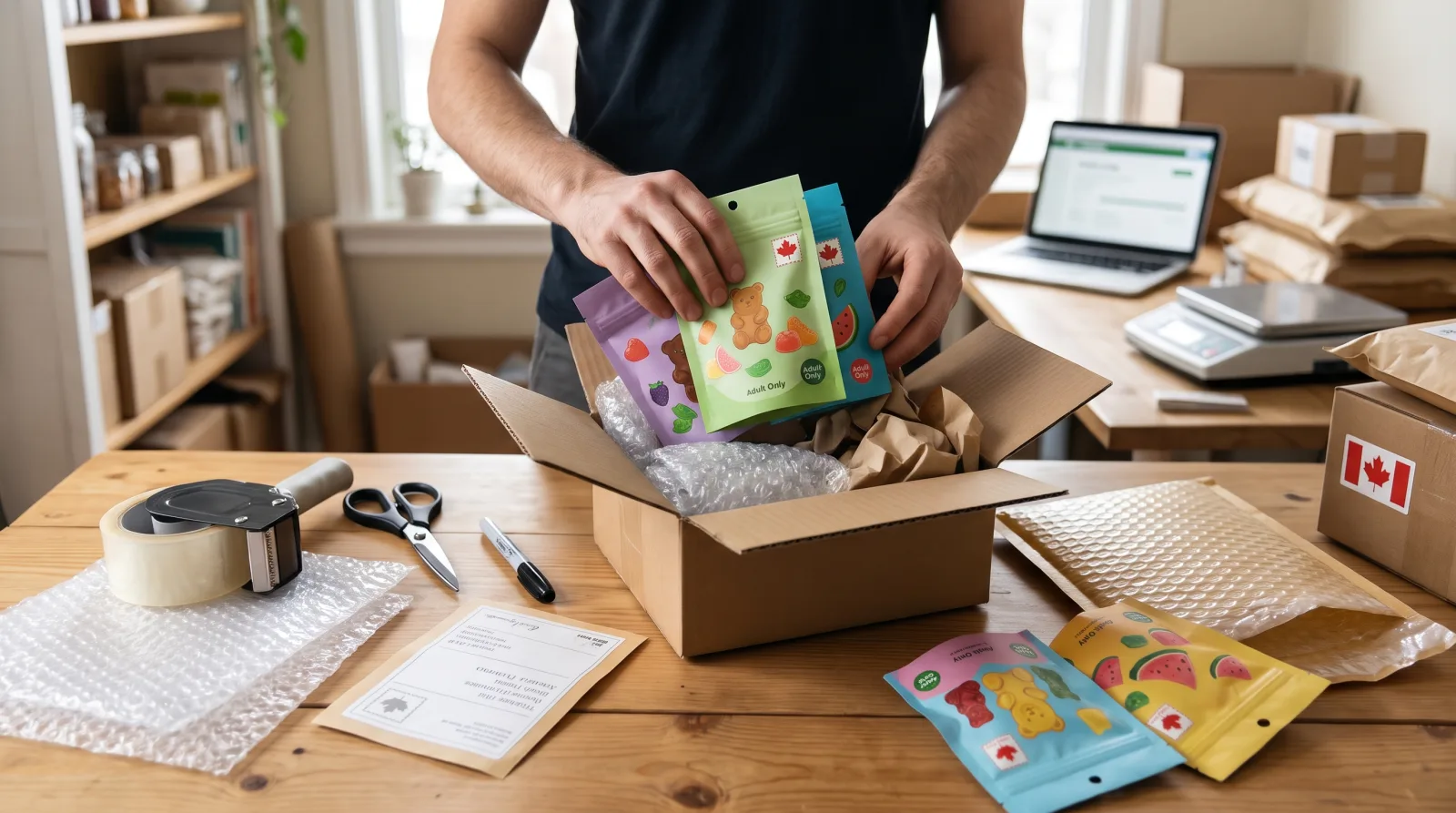
Ordering edibles by mail is simple until the weather gets involved. A bag of gummies can sit in a hot delivery truck in July or a frozen mailbox in January, and both can change what arrives at your door.
The good news is that most problems are predictable. Some edibles handle a few days in transit far better than others, and a few small choices about timing make a real difference.
In this post we cover what heat and cold do to edibles in transit, which types ship best, how orders are packed, and what to check when your package arrives.
What Heat Does to Edibles in Transit
Heat is the bigger risk for most edibles. A parked delivery vehicle in summer can get much hotter than the air outside, and a package may spend hours in one before it reaches you.
Gummies
Gummies made with gelatin start to soften on a hot day and can fuse into a single block. Gummies made with pectin, a fruit-based gelling agent, hold their shape at higher temperatures, which makes them a safer choice for summer shipping. The ingredients list usually says which one you are buying.
Chocolate
Chocolate is the most heat-sensitive edible. It starts to soften at around 30 °C and melts not far above that. Even if a bar sets again, it can develop a white or grey surface, known as bloom. Bloom is safe to eat, but melting can move THC around inside the bar, so the dose per square may no longer be even.
Candies and mints
Hard candies and mints tolerate heat well. In very hot, humid weather they can turn sticky on the outside, but they rarely lose their shape.
What Cold Does to Edibles in Transit
Cold is gentler on most edibles. Gummies and chocolate can freeze without much harm, although they may feel firm or brittle until they warm up.
The real winter problem is condensation. If you open a cold package in a warm kitchen, moisture forms on the products. That makes gummies sticky and can leave chocolate with a dull, sugary surface. Leave the sealed package to reach room temperature first.
Drinks are the exception. Canned and bottled THC drinks can freeze in a mailbox or an unheated depot, and a frozen can may bulge or leak. In deep winter, drinks are better picked up quickly or bought locally.
Which Edibles Ship Best
If you are ordering by mail, the type of edible matters as much as the strain or the dose. Here is how the main types usually hold up over a one-to-three-day trip.
|
Edible |
Summer shipping |
Winter shipping |
Best tip |
|
Hard candies and mints |
Very good |
Very good |
The safest choice all year |
|
Pectin gummies |
Good |
Very good |
Check the ingredients for pectin |
|
Gelatin gummies |
Fair; can soften and stick |
Very good |
Order early in the week in summer |
|
Chocolate bars |
Poor in a heat wave |
Good |
Avoid shipping during hot spells |
|
Syrups and tinctures |
Good |
Good |
Keep the bottle upright once it arrives |
|
Canned and bottled drinks |
Good |
Poor; can freeze |
Collect quickly in winter |
For year-round mail orders, THC candies and pectin-based THC gummies are the most forgiving. THC chocolates ship well from autumn to spring but are worth avoiding during a summer heat wave.
How Mail Order Edibles Are Packed
Good packaging does three jobs: it keeps the product intact, keeps the smell in, and keeps it away from children once it arrives. Our mail order service ships every order sealed, discreet and tracked by Canada Post Xpresspost, usually within 2 to 5 business days.
Inside the box, edibles should stay in their original packaging. The original package carries the dose information, and you need it to know how much THC each piece contains. If you ever receive loose edibles with no label, do not guess the dose.
A sealed package is not a cooler, though. Packaging slows changes in temperature but cannot stop them over several days, which is why timing your order matters.
Timing Your Order
Most shipping damage happens while a package waits, not while it moves. A few habits keep that waiting time short.
-
Order early in the week. A package sent on Monday or Tuesday is less likely to sit in a depot over the weekend.
-
Watch the forecast. In a heat wave or a deep freeze, wait a few days or switch to edibles that handle it, such as hard candies.
-
Follow the tracking. When the package is out for delivery, plan to be home or collect it the same day.
-
Avoid the mailbox in extreme weather. A metal community mailbox can get very hot in summer and freezes in winter. If you cannot be home, pick the package up from the post office promptly.
What to Do When Your Order Arrives
Bring the package inside and let it reach room temperature before you open it, especially in winter. Then check each product.
If gummies have stuck together or chocolate has melted and set again, the edibles are usually still safe to eat, but the dose may no longer be spread evenly. Treat each piece as having an unknown dose, start with a small amount, and contact us if the damage is severe. Reading the label carefully matters most here, because the difference between package totals and single doses is easy to miss. For reference, Health Canada limits legal edibles to 10 mg of THC per package, and suggests that new users start with 2.5 mg or less.
Once everything is checked, store edibles in their original child-resistant packaging, somewhere cool, dark and locked. Many edibles look exactly like ordinary candy, and children and pets cannot tell the difference. If a pet does get into them, call a vet straight away rather than waiting to see what happens.
When Local Delivery Makes More Sense
If you live in the capital region, shipping is not your only option. Orders through Ottawa weed delivery usually arrive within 30 to 90 minutes, between 9 AM and 9 PM, so chocolate in July or drinks in January never spend a night in a truck.
Wherever you are, you must be 19 or older in Ontario, or 21 in Quebec, and government photo ID is needed to receive the order. Browse the full edibles collection, then choose the type that suits the season and how long your package will be on the road.


