

 %

 %

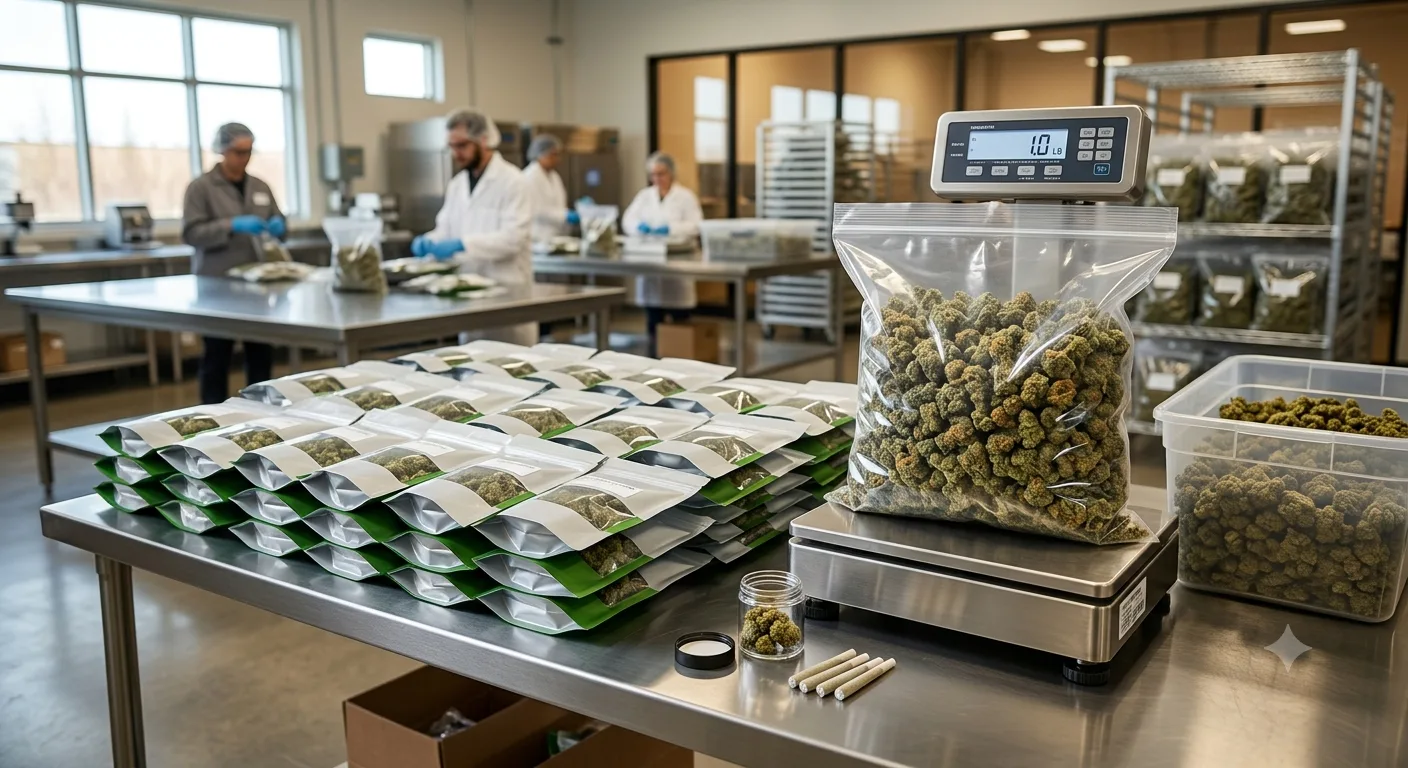
You've probably noticed that buying a full ounce costs less per gram than buying eighths. The same idea can apply to larger quantities, including quarter pounds, half pounds, and full pounds. However, bulk pricing only creates real savings when you understand the math, store cannabis properly, and use what you buy before quality starts to decline.
A lower price per gram can look attractive, but buying more does not always mean getting better value. If you purchase more flower than you can reasonably use, storage, freshness, and product quality can reduce the savings. The real question is not simply how cheap a pound is. It is whether the quantity matches your needs and budget.
Whether you're a medical user looking for a consistent supply, a social consumer sharing costs with friends, or someone who prefers fewer shopping trips, this guide explains how bulk weed pricing works. We'll look at common weight tiers, quarter-pound and pound economics, storage concerns, per-gram calculations, and the factors that can turn an attractive bulk deal into a poor value.
Understanding Cannabis Weight Tiers and Industry Pricing Structure
Before looking at pound-level pricing, it helps to understand the basic weight progression used in cannabis sales. Smaller quantities often have a higher per-gram price because packaging, handling, and retail costs make up a larger part of the final price. Larger purchases can reduce these costs and allow sellers to offer lower prices per gram.
Common cannabis weight tiers include:
- 1 gram
- 3.5 grams, commonly called an eighth
- 7 grams, commonly called a quarter
- 14 grams, or a half ounce
- 28 grams, or an ounce
- 112 grams, or a quarter pound
- 224 grams, or a half pound
- 448 grams, or a full pound
The discount between these levels is not always the same. Moving from a small package to an ounce may create a noticeable price difference, while moving from an ounce to a quarter pound may provide a different level of savings.
For this reason, never judge a bulk deal by the total price alone. Divide the price by the number of grams to find the actual cost per gram.
The Psychology Behind Bulk Pricing
Bulk pricing also affects how shoppers view value. A quarter pound may have a much higher total price than an eighth, but the cost per gram can be considerably lower.
For example, a quarter pound priced at $400 contains 112 grams. That works out to about $3.57 per gram. Comparing that number with the price per gram of smaller packages gives you a much clearer picture of the actual discount.
This is why calculating the unit price is more useful than simply looking at the headline price.
Regional Price Variations Across Canada
Bulk weed pricing can vary between Canadian markets. Product availability, local competition, operating costs, quality, and regulations can all affect the final price.
Consumers in larger markets may see more choices and a wider range of prices, while smaller or more remote markets can have fewer options. Ottawa and Gatineau, for example, are competitive markets with multiple cannabis purchasing options.
Local rules can also affect what quantities are available through regulated retailers. Before making a large purchase, check the rules that apply in your province and understand the difference between public possession limits, home storage, and purchasing restrictions.
Quarter Pound Economics: The Entry Point for Serious Bulk Buying
A quarter pound contains 112 grams, or four ounces. For someone who uses cannabis regularly, this can be a point where the per-gram savings become noticeable without committing to the size of a full pound.
For example, imagine an ounce costs $140. Buying four ounces separately would cost $560. If a comparable quarter pound is available for $420, the difference is $140, or 25%.
However, this comparison only works when the products are genuinely comparable. A lower-priced bulk product may be a different strain, quality grade, harvest, or product category.
When a QP Makes Financial Sense
A quarter pound can make financial sense for a regular consumer who:
- Uses cannabis consistently
- Has suitable storage
- Has already tried the product
- Understands the total upfront cost
- Can use the flower while it remains fresh
It can also make sense when several people legally share the cost and each person receives an appropriate amount.
For a light or occasional consumer, however, 112 grams may be far more than necessary. If it takes many months or years to use the product, the lower purchase price may not translate into better practical value.
Quality Variations in Bulk Quarter Pounds
Not every quarter pound represents the same quality as smaller packages. Some sellers offer the same flower in larger quantities, while others use specific bulk strains or lower grades.
Before comparing prices, consider:
- Strain
- Flower quality
- Freshness
- Harvest information when available
- Testing information
- Appearance and condition
- Whether the bulk product is the same batch as the smaller package
A cheaper product is not necessarily a better deal if the quality difference is substantial.
Half Pound and Full Pound Dynamics
Moving from a quarter pound to a half pound or full pound can reduce the per-gram price further, but the additional discount may become smaller.
For example, suppose a half pound costs $800. With 224 grams, that is about $3.57 per gram. A full pound priced at $1,400 works out to about $3.13 per gram. Doubling the quantity in this example only lowers the unit price by around 44 cents per gram.
This shows why the biggest package is not automatically the best economic choice.
|
Quantity |
Weight |
Example Price |
Approx. Cost Per Gram |
|
Eighth |
3.5 g |
$35 |
$10.00 |
|
Quarter |
7 g |
$90 |
$12.86 |
|
Half ounce |
14 g |
$150 |
$10.71 |
|
Ounce |
28 g |
$240 |
$8.57 |
|
Quarter pound |
112 g |
$420 |
$3.75 |
|
Half pound |
224 g |
$750 |
$3.35 |
|
Full pound |
448 g |
$1,350 |
$3.01 |
These figures are an example for understanding the math rather than a universal Canadian price list. Actual prices can change based on product, location, quality, and retailer.
The Wholesale vs. Retail Pricing Gap
Large quantities can sometimes resemble wholesale pricing, but retail buyers should not assume that a low price means they are receiving professional wholesale product
Very low prices can reflect differences in quality, age, inventory, market conditions, or supply channels. When comparing a pound with smaller quantities, always consider what you are actually receiving rather than focusing only on the amount of money saved.
For regulated purchases, product information and testing can provide additional confidence about what you're buying. Products from unregulated sources may not offer the same consumer protections.
Storage Challenges at Pound Scale
Storage becomes increasingly important as the purchase size grows. A large amount of flower should not simply be left in an opened bag or exposed to heat, light, and air.
Bulk buyers may need:
-
Airtight containers
-
Suitable humidity control
-
A cool, dark storage area
-
Separate containers for portions that will not be used soon
-
A consistent storage routine
Portioning can help reduce repeated exposure of the entire supply to air. The goal is to protect the flower from unnecessary changes in moisture, temperature, light, and oxygen.
Storage supplies also have a cost. If you spend $50 on suitable containers and humidity products, that expense should be included when calculating the real cost of your bulk purchase.
Calculating Real Per-Gram Value
The simplest calculation is:
Total price ÷ total grams = price per gram
For example:
$420 ÷ 112 grams = $3.75 per gram
But the sticker price is only one part of the calculation. You should also think about storage costs, how quickly you will use the product, and whether the flower will remain in acceptable condition throughout that period.
A $3-per-gram purchase is not necessarily better value than a $5-per-gram purchase if a large portion of the cheaper product sits unused for too long.
The Freshness Depreciation Curve
Cannabis flower can change over time. Exposure to oxygen, heat, light, and unsuitable humidity can affect aroma, texture, appearance, and overall quality.
Good storage can slow these changes, but it cannot remove the need to consider time. This is especially important for anyone buying a quarter pound, half pound, or full pound.
Instead of assuming that every gram will have exactly the same value throughout the year, think about how quickly you can realistically use the product while it remains in good condition.
This is one reason buying smaller amounts more frequently can sometimes provide better practical value, even when the initial price per gram is higher.
Hidden Costs in Bulk Cannabis Purchasing
Bulk purchasing has costs that may not appear on the product listing.
The first is the amount of money tied up in the purchase. Spending $1,000 or more at once means that money cannot be used for other purchases or saved for later.
The second is storage. Larger quantities need more space and better organization.
The third is variety. Buying one large quantity can mean using the same product for an extended period. Some consumers may prefer having different strains or product options instead.
There is also the risk that you simply do not enjoy the product as much as expected. Buying a small amount first can reduce that risk.
Smart Bulk Buying Strategies for Better Value
If bulk purchasing fits your needs, start with the product rather than the quantity.
Test Before Buying in Volume
If possible, try a smaller amount before committing to a large purchase. This gives you an opportunity to assess the flower's quality, aroma, texture, and overall suitability.
A small initial purchase can prevent a much larger purchase from becoming an expensive mistake.
Consider Shared Purchases Carefully
Some consumers may consider splitting a larger purchase with friends. Any shared purchase should follow applicable laws and possession rules, and each person should understand exactly what they are receiving.
The main advantage is that each person may avoid storing a very large quantity alone.
Maintain Some Variety
Instead of committing all your budget to one product, some consumers may prefer several smaller quantities. This can provide more variety while still allowing them to take advantage of occasional volume pricing.
The right balance depends on consumption habits, budget, storage space, and personal preferences.
Seasonal Timing and Market Dynamics
Cannabis prices can change with supply, demand, inventory, and market competition. Certain periods may have more product available, while other periods may have fewer choices.
Promotional periods can also affect pricing. However, a discount only creates value if the product is something you would actually purchase and use.
Chasing a temporary deal can lead to overbuying. A lower price should not be the only reason to purchase a large quantity.
Building Relationships with Reliable Suppliers
Regular shoppers may notice that retailers offer different promotions, loyalty programs, or volume pricing at different times.
When comparing suppliers, look beyond price. Consider product information, customer service, delivery policies, freshness, and the transparency of the purchasing process.
For local consumers, a local delivery service can also be convenient when it operates within applicable regulations.
The goal should be finding a reliable source of suitable products rather than simply finding the lowest advertised pound price.
When Bulk Buying Actually Costs You Money
Bulk purchasing can become poor value when the quantity is larger than your actual needs.
For example, someone using only a small amount each week could take a very long time to finish 112 grams. Even excellent storage cannot guarantee that the product will remain exactly as it was when first purchased.
Another problem occurs when someone buys a large amount of an unfamiliar product simply because the price appears attractive.
Imagine a person normally buys premium flower for $240 per ounce but sees a quarter pound priced at $300. The bulk price looks extremely low. However, if the product does not meet their quality expectations, much of the purchase may go unused.
In that situation, the cheaper price per gram does not necessarily represent better value.
The Tolerance and Variety Factor
Regular cannabis use can lead to tolerance, meaning some people may notice that the same amount no longer produces the same effects over time. Buying a large amount of one product does not solve this issue.
For some consumers, having variety may be preferable to keeping one strain for an extended period. Medical users following a consistent product plan may have different needs and should follow professional guidance where appropriate.
The key economic point is simple: buying more can encourage longer-term commitment to one product, so consider your actual habits before purchasing a very large quantity.
Opportunity Cost of Money Tied Up
Another important factor is opportunity cost.
If you spend $1,400 on a full pound, that money is committed to cannabis rather than remaining available for other needs. A smaller purchase may cost more per gram but leave more money available for future purchases, household expenses, savings, or unexpected costs.
This flexibility has value.
Bulk purchasing therefore works best when the buyer has both the need for the quantity and the budget to comfortably pay for it.
Provincial and Legal Considerations for Bulk Cannabis Purchases
Canadian cannabis laws include rules around possession, purchasing, transportation, and home cultivation. These rules can differ depending on the situation and province.
The commonly discussed 30-gram public possession limit should not be treated as a blanket rule for every form of cannabis possession or purchasing. Buyers should check current federal and provincial requirements before making large purchases.
It is also important to distinguish regulated purchases from unregulated sources. Regulated products may provide information and consumer protections that are not necessarily available through informal channels.
For anyone considering a large purchase, understanding the applicable rules is just as important as calculating the price per gram.
Practical Example: Breaking Down Ottawa Bulk Pricing
Let's use an example to understand how bulk pricing changes the economics.
Suppose a product is listed at:
-
$35 for 3.5 grams
-
$90 for 7 grams
-
$150 for 14 grams
-
$240 for 28 grams
-
$420 for 112 grams
-
$750 for 224 grams
-
$1,350 for 448 grams
The corresponding price per gram is approximately:
-
$10.00/g for 3.5 grams
-
$12.86/g for 7 grams
-
$10.71/g for 14 grams
-
$8.57/g for 28 grams
-
$3.75/g for 112 grams
-
$3.35/g for 224 grams
-
$3.01/g for 448 grams
The example shows why larger quantities can have a substantially lower unit price.
However, the calculation should not stop there. You still need to consider product quality, storage, freshness, your budget, and how quickly you will realistically use the purchase.
When the Math Supports Buying in Bulk
Bulk purchasing can make economic sense when:
-
You use cannabis consistently
-
The product has already been tested by you
-
You have appropriate storage
-
The upfront cost fits your budget
-
You can use the product before significant quality loss
-
The bulk discount is meaningful compared with your usual purchase size
For someone who uses only occasionally, smaller purchases may provide better practical value.
Alternative Approaches to Bulk Economics
You do not need to purchase a full pound to benefit from lower prices.
One option is buying an ounce when there is a suitable promotion. This can provide some of the advantages of bulk pricing without requiring the same amount of storage.
Another approach is comparing loyalty programs or repeat-purchase discounts. These can reduce the effective cost over time without requiring one very large purchase.
Regular delivery schedules can also help some consumers manage their supply more consistently. The important point is to match the purchase schedule with actual use rather than buying more simply because the unit price is lower.
Quality vs. Quantity: The Premium Bulk Decision
The final question is whether you prefer more product or higher product quality.
For example, a quarter pound of good-quality flower at $380 may provide a lower cost per gram. An ounce of premium flower at $240 costs more per gram but may offer characteristics that matter more to a particular consumer.
There is no single answer for everyone.
Someone focused mainly on consistent value may prefer larger quantities of dependable flower. Someone who places greater importance on aroma, appearance, terpene profiles, or premium quality may prefer smaller quantities.
A middle-ground approach can also work. Some consumers may purchase a larger amount of a dependable product while keeping part of their budget available for smaller quantities of other products.
Frequently Asked Questions
A quarter pound contains 112 grams, which is equal to four ounces. It is one of the larger cannabis weight tiers and may offer a lower price per gram than smaller purchases.
A full pound contains 448 grams, or 16 ounces. The total price varies significantly based on location, product quality, availability, and retailer.
Bulk cannabis can have a lower price per gram, but the overall value depends on how much you use, storage costs, freshness, product quality, and the amount of money committed upfront.
Bulk flower should generally be kept in suitable airtight containers in a cool, dark environment with appropriate humidity control. Dividing a large supply into smaller portions can help limit repeated exposure to air.
It depends on your needs. A quarter pound may offer a lower cost per gram, but an ounce may be more practical for someone who uses cannabis less frequently or wants to maintain freshness and variety.
Divide the total purchase price by the total number of grams. For example, $420 divided by 112 grams equals $3.75 per gram.
No. A full pound may have the lowest sticker price per gram, but it may not be the best value if you cannot use the product before quality declines, do not have suitable storage, or would prefer different products.


